Cathedral view

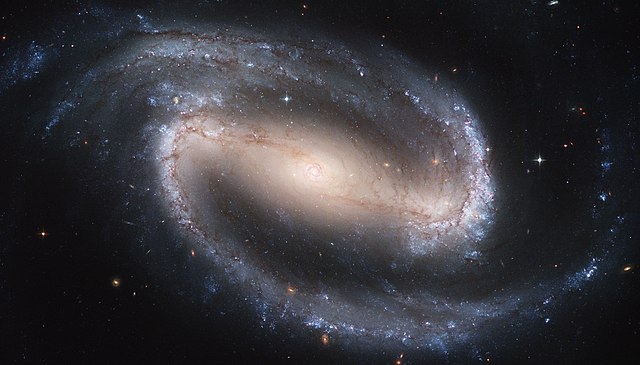
How do galaxies form? Answers to this question remain incomplete and drive a lot of discussion amongst professional astrophysicists. Two main sets of physical processes are currently considered to be the most relevant. In the first, galaxies form via successive mergers of smaller stellar systems, whereas in the second, galaxies form through the accretion of gas that drives the formation of new stars. Theoretical work suggests that mergers produce large concentrations of stars in the central regions of galaxies, whereas gas accretion leads to smoother stellar mass distributions within galaxies. In this project, you will test these hypotheses by using our telescopes to obtain images of a number of galaxies and measure their central concentration of stellar mass. Your results will be used to test how the observed galaxies formed. There are two possible science projects. You can undertake one, or both projects: a) how do galaxies form and b) how the concentration of light in galaxies varies with wavelength.
Identify a suitable target (or targets) and then conduct the observations. In order to get good photometry from Durham, targets will probably need to be ~12mag or brighter (depending on extent). They will also need to be visible during the night! (See e.g. StarAlt).
Decide which band you want to observe in, and take a series of images of your target (the tracking on the telescope means that it is better to take many short images that one long one), but think about the trade off between number of exposures and exposure time (look at data in the archive to estimate whether the observations will be dark, photon, or sky noise limited).
Calibrate the photometry and astrometry of the individual images. Useful information for this can be found here and here.
Stack the images to construct a mosaic from which the measurements can be made. The stacking procedure is detailed here, or use AstroImageJ.
Calibrate the CCD to test whether the images are read-noise-, dark-current-, sky-noise-, or photon-noise- limited. You may want to check that signal is linear. For the read-noise, you could obtain a set (short) dark images from which you can check the noise in a single pixel (or set of pixels). For the dark current, measure the signal in "dark" mode as a function of exposure time. What is the Bias level? Check the linearity to ensure your magnitudes are reliable? Measure the gain (why might this be important?)
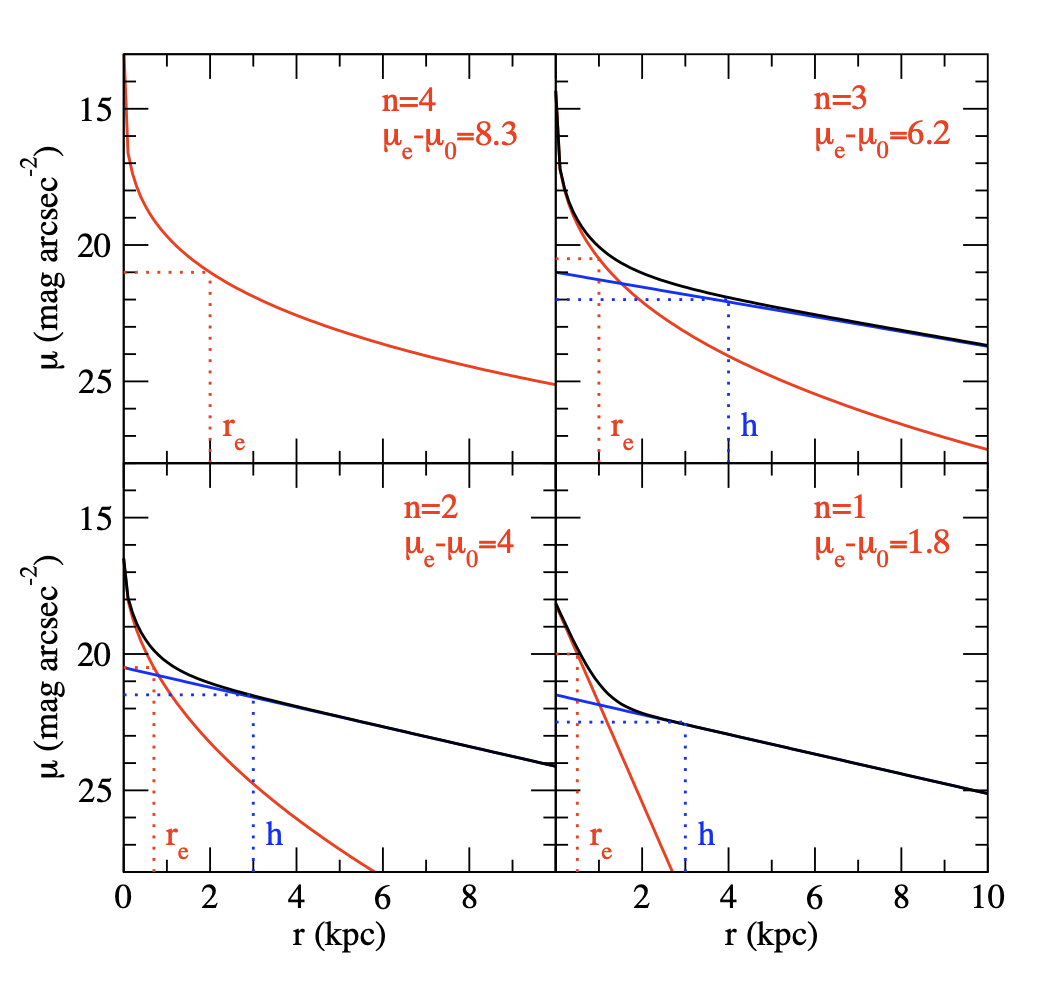
Create from the galaxy image a surface brightness radial profile, such as the ones in the figure below.
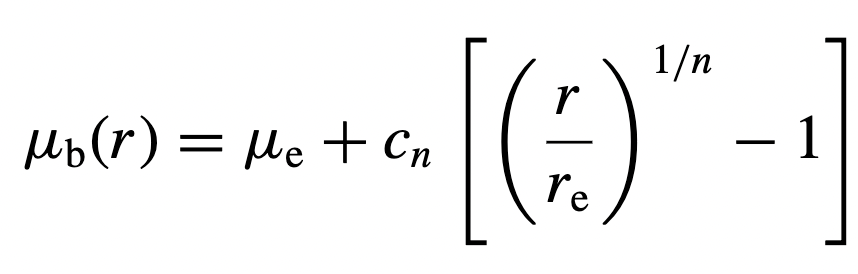
Fit the surface brightness radial profile with a Sérsic function and calculate the Sérsic index n, which is a measurement of the central mass concentration (more information here):
Alternatively, you can compute the central mass concentration by calculating the ratio between the radius that contain 90% of the light of the galaxy and the radius that contains 50% of the light of the galaxy (R90/R50).
Discuss how the values you obtained for n and/or R90/R50 can tell you what processes formed the galaxy you observed. Did the galaxy form via mergers (high values) or gas accretion (low values)? See typical values in Fig. 5 of Gadotti (2009).
What challenges and curious aspects of this analysis have you found interesting? Is it easy to measure n or R90/R50? Do they vary with image band? What would you do differently? What would you do if you had to do the same for 1000 galaxies?
Cathedral view
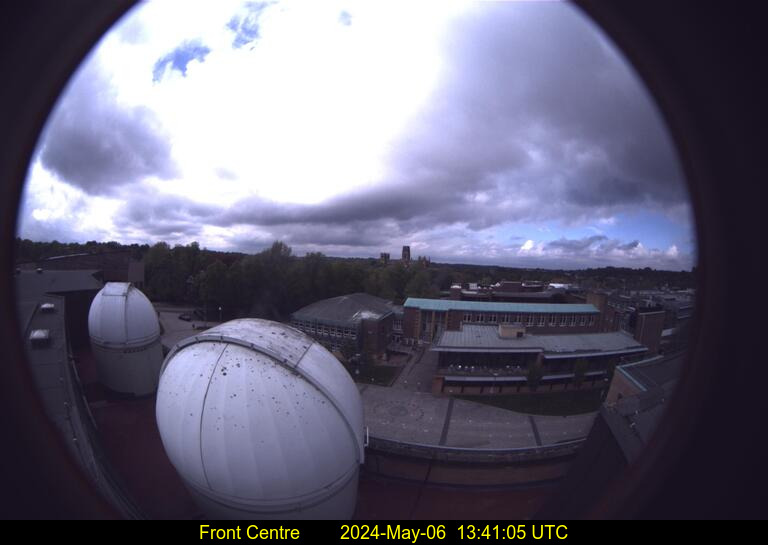
Roof Front-Centre
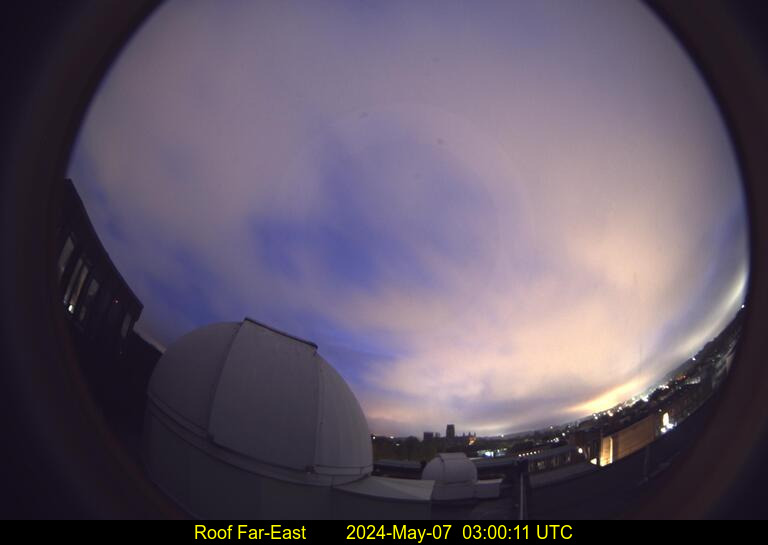
Roof Far-East
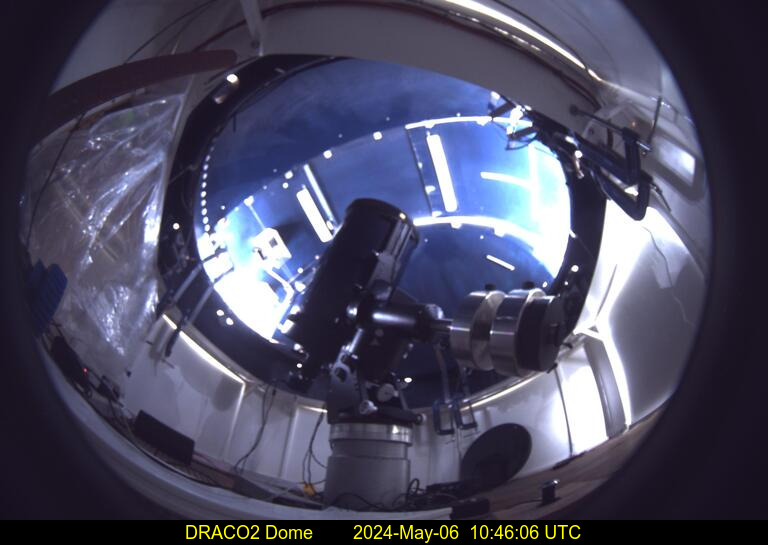
Draco2
East-16
FE20
West-14